
What Is Cupping Therapy?
Cupping therapy is an old bodywork practice where small cups create gentle suction that lifts tissue instead of pressing it. At Ten Toes in Lawrence, KS it runs as a calm spa session — +$30 added to any massage or $55 standalone — open daily 9 am–9:30 pm, walk-ins welcome. This plain-English guide covers the marks, the safety basics, and what a first session feels like.
4.9 on Google · 10000+ happy customers | Walk-ins welcome | Free parking outside the suite
Cupping therapy at a glance
Key numbers for a Ten Toes Chinese cupping session on Clinton Parkway — 15 to 30 minutes on the table, 4 to 8 cups, a +$30 add-on price, and marks that clear within 10 days. If you only read one part of this cupping therapy guide, make it this table and the safety notes.
| Detail | Number | Note |
|---|---|---|
| Session length | 15–30 min | +$30 add-on or $55 standalone |
| Pressure / suction | Medium | Adjusted per skin response |
| Cups per session | 4–8 | Upper back is most common |
| Stationary cup time | 5–10 min | Moving passes run 2–5 min |
| Mark fade time | 3–10 days | Light sessions clear in 2–3 days |
| Add-on price | +$30 | Onto any 60 or 90 min massage |
| Standalone session | $55 | 30 min of focused cupping |
| Recommended frequency | 1× / month | Leave 10–14 days between sessions |
Cupping therapy in plain English
Small cups, gentle suction, tissue lifted instead of pressed — that's the whole idea in one sentence. A typical session uses 4 to 8 cups for 15 to 30 minutes, costs +$30 on top of any massage, and leaves marks that fade within 3 to 10 days.
Cupping is an old bodywork practice — small cups placed on the skin, gentle suction created underneath, and the tissue gets lifted instead of pressed. That's the whole idea in one sentence. It's used in many traditions, but the version most people in Lawrence run into is Chinese cupping, which has been practiced for well over 2,000 years and is still practiced today as both a wellness session and, in some clinical settings, an adjunct therapy. We do the spa version on Clinton Parkway, and that distinction matters more than people realize.
The short answer to "what does cupping actually do?" is honestly less dramatic than the internet makes it sound. Suction pulls the skin and the layer just under it upward, which a lot of people experience as a deep, satisfying tug. Some folks feel an immediate sense of release in tight areas; others mostly notice it as a quiet, focused kind of bodywork. There's no magic, and there's no medical guarantee. What there is, when it's done well, is a calm hour of focused work that feels different from a standard massage in Lawrence, KS — and that's what most first-timers are looking for when they search the best cupping in Lawrence. A lot of folks searching massage near me end up reading this guide before they book.
There's no magic, and there's no medical guarantee. What there is, when it's done well, is a calm hour of focused work that feels different from a standard massage. — On what cupping actually delivers
For context, cupping isn't a replacement for a regular massage in Lawrence — it's an adjacent option, and the two pair well together. Many of our guests book it as part of a longer massage therapy in Lawrence visit, so the upper back gets both focused cupping and integrated hands-on follow-up. Some pair it with a 60-minute body massage in Lawrence, KS for the most complete reset.
Dry cupping vs fire cupping — what's the difference?
Two methods, same end result — how the suction is created, and which one we actually use on Clinton Parkway.
Two terms keep coming up when people read about cupping therapy online: dry cupping and fire cupping. They're not opposites; they're two ways of creating the suction.
Dry cupping uses a small pump (sometimes a squeeze-bulb on silicone cups, sometimes a hand pump on glass cups) to draw air out of the cup and create the vacuum. It's clean, controlled, and easy to dial in for sensitive skin or first-timers. Most spa cupping in Lawrence and most clinical cupping is some form of dry cupping. The small brass cup style we use in our Chinese cupping sessions on Clinton Parkway falls into this category — we set the suction, we feel how the skin responds, and we go from there.
It looks dramatic, and it's the version that shows up in old documentaries and TikTok clips, but the suction it creates is the same kind of suction you'd get from a pump. — On fire cupping, demystified
Fire cupping uses a brief flame — 1 or 2 seconds inside the cup — to heat the air before the cup goes on skin. As the air cools, it contracts, and the cup grips. It looks dramatic, and it's the version that shows up in old documentaries and TikTok clips, but the suction it creates is the same kind of suction you'd get from a pump. Not better, not worse — just a different way of getting there. We mostly stick with controlled dry cupping in our spa setting because it's easier to fine-tune and easier on guests who are nervous about flames near their back.
There's also wet cupping (also called hijama in some traditions), which involves small skin nicks. We don't do wet cupping. It belongs in a medical context with people specifically trained for it. If that's what you're looking for, this isn't the page — and we'd point you elsewhere. For a broader medical overview of all three methods, the NCCIH cupping overview is a good plain-English read.
About those circular marks
The single most-asked cupping question, answered honestly — what the marks are, how long they last, what they don't mean.
This is the single most-asked question about cupping. Here's the honest answer.
Cupping can leave temporary circular marks on the skin. They aren't bruises in the standard impact-bruise sense. They're the skin's response to the suction — the small blood vessels right under the surface react, and you see circles ranging from light pink to deeper purple. The depth varies a lot person-to-person. Some people barely mark; others mark immediately. Neither one is a sign of how "well" the session worked.
One myth worth retiring: darker marks do not mean the session worked better. — On the most common cupping misconception
How long do cupping marks last? Most fade within 3 to 10 days. A light session with short cup time may fade in 2 or 3 days. Stronger or longer sessions can stick around closer to 10 or 11 days. If you've got a beach trip, a wedding, a tank-top weekend or a swim meet coming up, just tell your therapist at intake — we'll either lighten the work or place the cups where clothing covers easily. That conversation is the norm at our spa, not the exception.
One myth worth retiring: darker marks do not mean the session worked better. We hear this a lot. It's not how it works. Cup intensity should match what your skin and your comfort can handle, not what makes the most dramatic photo. If a provider is racing toward darker marks as proof of skill, that's a yellow flag.
What does a cupping session feel like?
Intake, warm bowl wash, brass cup comfort test, 5 to 10 quiet minutes under the cups, then hands-on integration — the actual choreography of a Ten Toes cupping hour, minute by minute, from the front desk to the moment you see the marks in the mirror.
At Ten Toes Reflexology on Clinton Parkway, a cupping session opens the same way every other service does — a quick intake at the front desk. The therapist'll ask about any skin conditions, blood thinners, recent sun exposure, sensitive spots, and what you want from the session. 2 or 3 minutes total, no twenty-page health history.
Then back to the room. The warm bowl wash is the first thing you'll feel — we clean and warm the area, usually the upper back, sometimes the shoulders or low back. A small amount of oil goes on so the cups can either stay put for stationary work or slide along the back for moving cupping. The small brass cup is placed first as a comfort test. You'll feel a steady deep tug, never a sharp pinch. Pressure is checked. Then the rest of the cups go on.
Most first-timers tell us the actual sensation is more relaxing than they expected. — On what surprises new guests
Stationary cups stay 5 to 10 minutes. Moving cups glide along the muscle and the meridian lines for 2 to 5 minutes at a time. The therapist might combine both. Some people stay quiet the whole session; others ask questions; both are completely fine. When the cups come off, there's usually 5 minutes of hands-on integration — gentle massage to ease the area back to neutral — and you'll see the temporary circular marks.
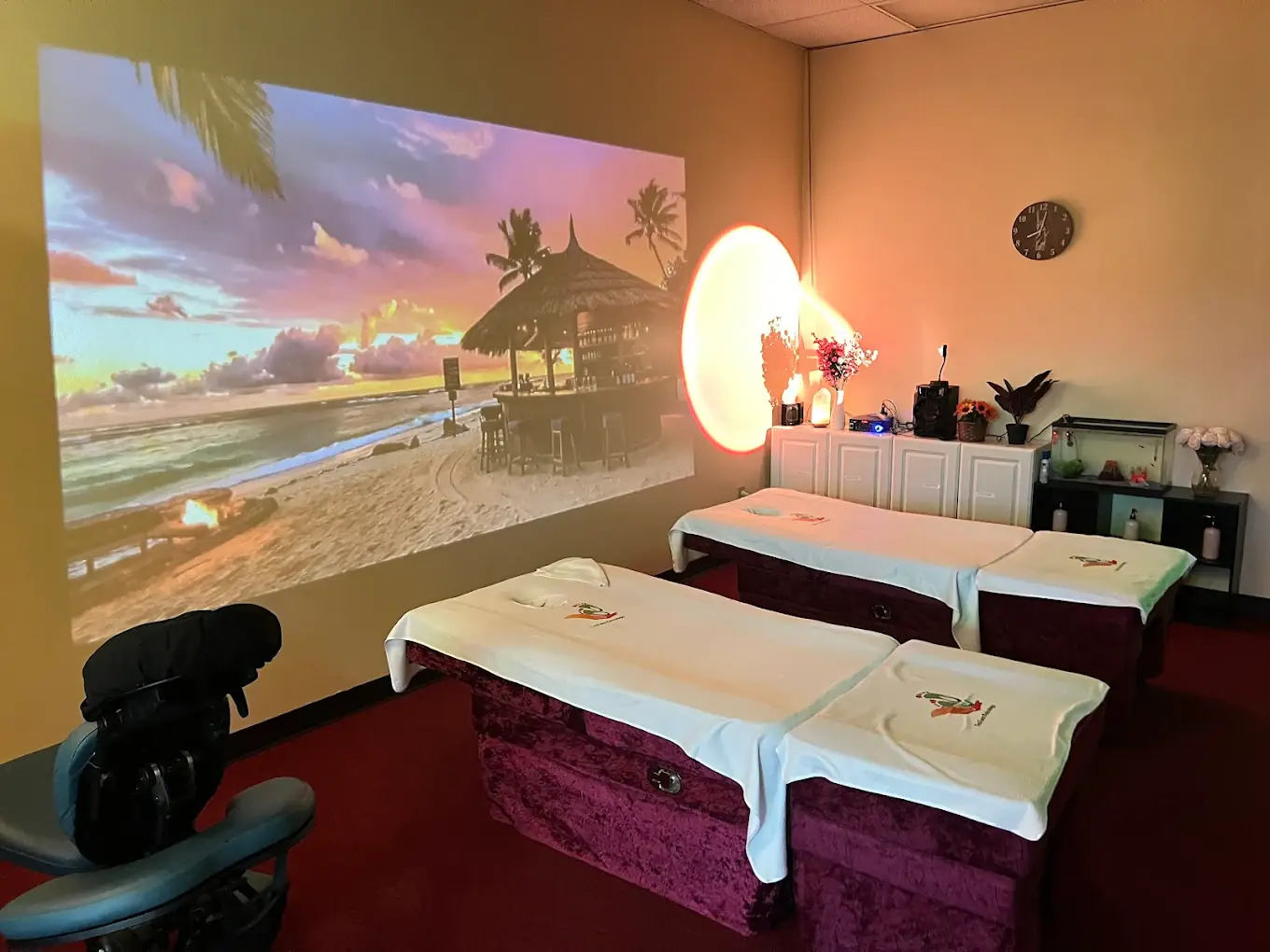
The whole arc, in order:
- Front-desk intake — 2 to 3 minutes on skin, medications, and what you want from the hour.
- Warm bowl wash of the area, then a light layer of oil so cups can sit or glide.
- Comfort test with 1 brass cup, suction adjusted to your skin's response.
- 4 to 8 cups placed — stationary sets rest 5 to 10 minutes, moving passes run 2 to 5.
- Cups off, 5 minutes of hands-on integration, and a first look at the marks.
Most first-timers tell us the actual sensation is more relaxing than they expected. The session pairs well with a regular massage in Lawrence, KS, especially if your upper back has been holding stress for weeks. We're a spa, not a chiro office, and the vibe is closer to inner peace and balance than to a clinical rehab appointment. Compared with booking only a standard massage in Lawrence, KS, adding cupping gives the upper back a different texture of bodywork the same hour.
Can you do cupping on your feet?
Cups can go on the arch, heel and calf, not just the back — but we don't offer foot cupping at Ten Toes. Our cupping stays on the upper back, shoulders and low back, where the fascia work pays off most. If it's tired or aching feet you're dealing with, a 30-minute foot reflexology session at $35 is the better booking.
Is cupping safe? Who should ask a doctor first?
Generally safe with a trained provider — but with honest caveats and a clear list of who should ask a clinician first.
The National Center for Complementary and Integrative Health (NCCIH) describes cupping as generally safe when performed by a trained provider. The same source flags possible side effects honestly: skin discoloration, temporary skin irritation, mild discomfort, and — in rare cases — burns or infection, almost always tied to poor sanitation. NCCIH echoes the same honest framing on its cupping therapy page. We keep everything spa-clean, sanitize between sessions, and ask the right intake questions so this stays in the calm-spa lane.
Please check with your doctor before booking cupping if any of the following apply: you've got a bleeding disorder, you're on blood thinners, you're pregnant, you have any skin condition in the treatment area, you've had recent surgery in that area, or your clinician has flagged something that makes intense bodywork inappropriate. If they clear you, we're a good fit. If they don't, we'd rather you skip the session than push it.
Cupping at Ten Toes is not a medical treatment. We don't claim to cure, heal or treat any condition. — A boundary worth stating
One more boundary, because it matters: cupping at Ten Toes is not a medical treatment. We don't claim to cure, heal or treat any condition. If you have a specific injury or diagnosis, please see a clinician first. We're a calm spa option for traditional Chinese cupping Lawrence guests who want the experience in a soothing setting — not an injury clinic.
What cupping therapy costs in Lawrence
Cupping pricing is simple at our spa — one add-on price, one standalone price, and two combo tiers. No memberships required, no surprise fees, and the menu below is the same menu you'll see at the front desk on Clinton Parkway.
| Session | Time | Price |
|---|---|---|
| Cupping add-on to any massage | 15–20 min extra | +$30 |
| Standalone cupping session | 30 min | $55 |
| Massage + cupping | 60 min | $105 |
| Massage + cupping | 90 min | $135 |
For context against the rest of the menu: foot reflexology starts at $35 for 30 minutes, a Swedish or deep tissue hour is $75, and the 60-minute combo — 30 minutes on the feet, 30 on the back — runs $65. Cupping slots into any of them for $30 more, which is why most guests try it first as an add-on rather than a standalone booking.
How to pick a good cupping provider in Lawrence
A short checklist of questions to ask before you book cupping anywhere — at Ten Toes or elsewhere in town.
A few simple questions to ask before you book cupping anywhere — not just here. Does the provider keep cups visibly clean and sanitize between sessions? Will they ask you about skin conditions, blood thinners and medical history at intake? Will they check pressure throughout the session and adjust if anything feels off? Are they running this as a spa or as a medical service, and is the framing honest about it?
If you're searching the best cupping in Lawrence and a spot is mainly chiro or rehab focused, that's not wrong — it's just a different category. Our licensed, top rated massage therapist in Lawrence Kansas team runs cupping as part of a calm spa visit, and we're at 4.9 stars on Google with 10000+ happy customers. We're a 10-minute drive from KU campus and about 10 minutes from downtown, open 7 days a week from 9 am to 9:30 pm. The full Chinese cupping menu, pricing and intake details live on our cupping service page. If you read this guide and you're still curious, that's the next click.
Frequently asked questions
- What is cupping therapy in plain English?
- It's an old bodywork practice where small cups are placed on the skin and gentle suction is used to lift the tissue underneath. Most people doing Chinese cupping in Lawrence today book it for relaxation and focused upper-back work — not as a medical fix. At Ten Toes we run it as a spa session, not a clinic appointment.
- Does cupping hurt?
- Honestly, no sharp pain. The feeling is a steady, deep pull — almost the reverse of a regular massage. If anything ever feels too intense, your therapist'll lift the suction right away. Most first-timers say it's way less intense than they expected.
- How long do cupping marks last?
- Usually 3 to 10 days, depending on the person and how strong the suction was. They aren't bruises in the traditional sense, even though they can look similar. Marks fade on their own; you don't need to do anything special to them. Full breakdown in our cupping marks explained guide.
- Does a darker mark mean it worked better?
- No. That's a common misconception. Darker doesn't equal better, and stronger suction isn't a sign of a more effective session. We adjust to your skin and comfort — not to leave dramatic marks.
- What should I wear for a cupping session?
- Whatever's easy to slip out of for the area being worked on. For upper-back cupping, a tank or sports bra works fine; we provide sheets and a wrap, and you'll stay covered the whole time except for the cupped area.
- Is cupping safe?
- The National Center for Complementary and Integrative Health (NCCIH) describes cupping as generally safe when done by a trained provider. It also notes possible side effects: skin discoloration, temporary skin irritation, mild discomfort, and rare reports of burns or infection — usually tied to poor sanitation. Ask your doctor first if you have a bleeding disorder, are on blood thinners, are pregnant, or have a skin condition in the treatment area.
- Is cupping a medical treatment?
- Not at Ten Toes. We offer Chinese cupping in Lawrence as a relaxation spa service, not medical care. If you're dealing with a specific injury or condition, see a clinician first. For athletes specifically, see our cupping for athletes guide. We're happy to be the calm spa follow-up.
- What aftercare do you actually need?
- Drink water, keep the area warm for 24 hours, skip ice baths or long swims same-day, and avoid harsh exfoliants on the spot. The marks fade on their own; a gentle moisturizer is fine. Our massage aftercare guide covers it in more detail.
- How much does cupping cost at Ten Toes?
- Cupping is +$30 added onto any massage on the menu, $55 for a standalone 30-minute session, $105 for a 60-minute massage with cupping, or $135 for the 90-minute version. Gift cards cover all of them and stay valid 12 months — full menu and booking details on our Chinese cupping service page.
Related guides and services
Chinese Cupping in Lawrence
Book the session this guide describes — +$30 add-on or $55 standalone, intake details included.
Deep Tissue Massage
$75 for 60 minutes — pair it with cupping if your upper back's been holding stress for weeks.
Massage Aftercare Guide
Hydration, rest, soreness — what to do for the 24 hours after a cupping or massage session.
You may also like
Chinese Cupping Service
The calm spa version — +$30 add-on, $55 standalone.
Read more → GuideCupping Marks Explained
Why the circles fade in 3 to 10 days, color by color.
Read more → GuideCupping for Athletes
How pros have used it since the 2016 Rio moment.
Read more → ServiceDeep Tissue Massage
$75 an hour — pair with cupping for held tension.
Read more → GuideMassage Aftercare
The 24 hours after a cupping or massage session.
Read more → LawrenceMassage in Lawrence Hub
30-second service picker + drive times.
Read more →Ready to try cupping?
3514 Clinton Parkway, Suite F · Lawrence, KS · Open daily 9 AM to 9:30 PM